

CT Senator Chris Murphy Disconnects from Economic Reality
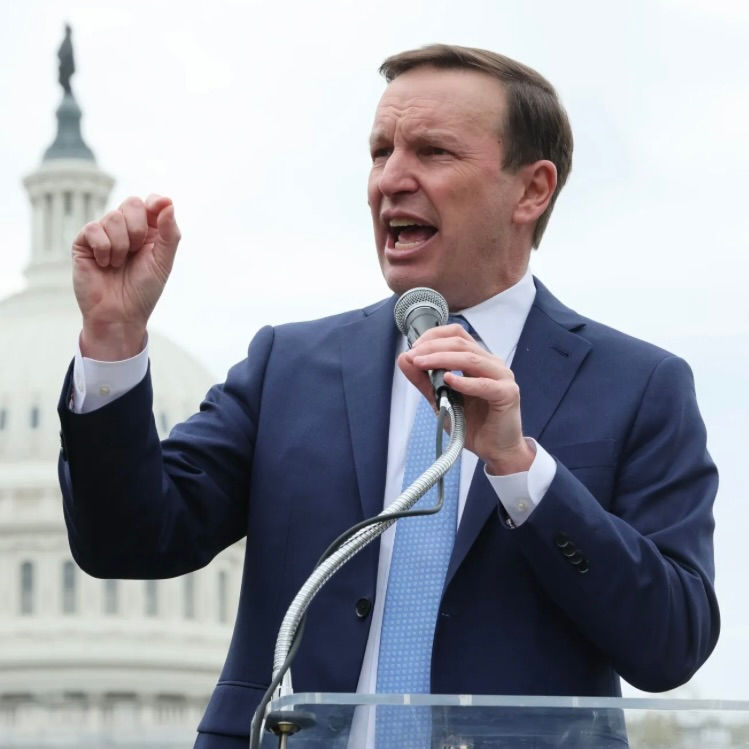
Even the liberal media is astonished at the lack of basic economic common sense coming out of Connecticut. Senator Chris Murphy (D-CT) recently introduced the "Living Wage For All Act"—a radical bill to force a nationwide federal minimum wage hike from $7.25 to $25.00 an hour. That is a staggering 245% increase.
The bill wastes no time. It kicks off with an immediate 66% spike to $12.00 an hour in year one, before setting a split schedule for businesses. Large employers are forced to absorb the $25.00 mandate in just five years (by 2032), while smaller businesses are given a slightly longer execution window until 2039. Murphy's bill would strip state-level autonomy, forcing identical wage floors onto rural communities and high-cost cities alike.
The immediate national reaction from across the political spectrum has been one of sheer disbelief:
The Post editorial board didn't mince words, warning that Murphy's bill would aggressively raise consumer prices and destroy jobs. Pointing to California's disastrous experiment raising fast-food wages to $20—which wiped out 18,000 jobs in a single year—they concluded that Murphy's proposal acts as an "anti-affordability" driver that will deeply hurt the exact lower-income households it claims to protect.
Legal scholar Jonathan Turley highlights the inevitable corporate response to artificial price controls: mass automation. If businesses are legally forced to pay entry-level workers $25 an hour, they will simply accelerate the transition to self-checkout kiosks, robotic kitchens, and AI, permanently eliminating the first rung of the economic ladder for young and low-skilled workers.
Sexton dismantles Murphy’s defense of the bill on Meet the Press, where the Senator claimed "we can afford it." Sexton points out the obvious flaw in Murphy's math: "we" don't pay the wages; independent businesses do. Forcing small business owners to shoulder massive, mandated payroll spikes will force widespread closures and reduced hours.
The editorial board takes a hard look at the devastating math behind forcing a $25 baseline onto the hospitality and service industries, warning that the nonpartisan Congressional Budget Office previously found even a $17 baseline would trigger mass unemployment. Forcing a $25 floor is nothing short of economic sabotage.
Between the Lines: While this bill has zero chance of passing the current Republican-controlled Congress, its introduction signals a dangerous direction for the Democratic platform. It leaves people wondering what exactly is happening in Connecticut that voters would elect someone so completely disconnected from the realities of running a business.